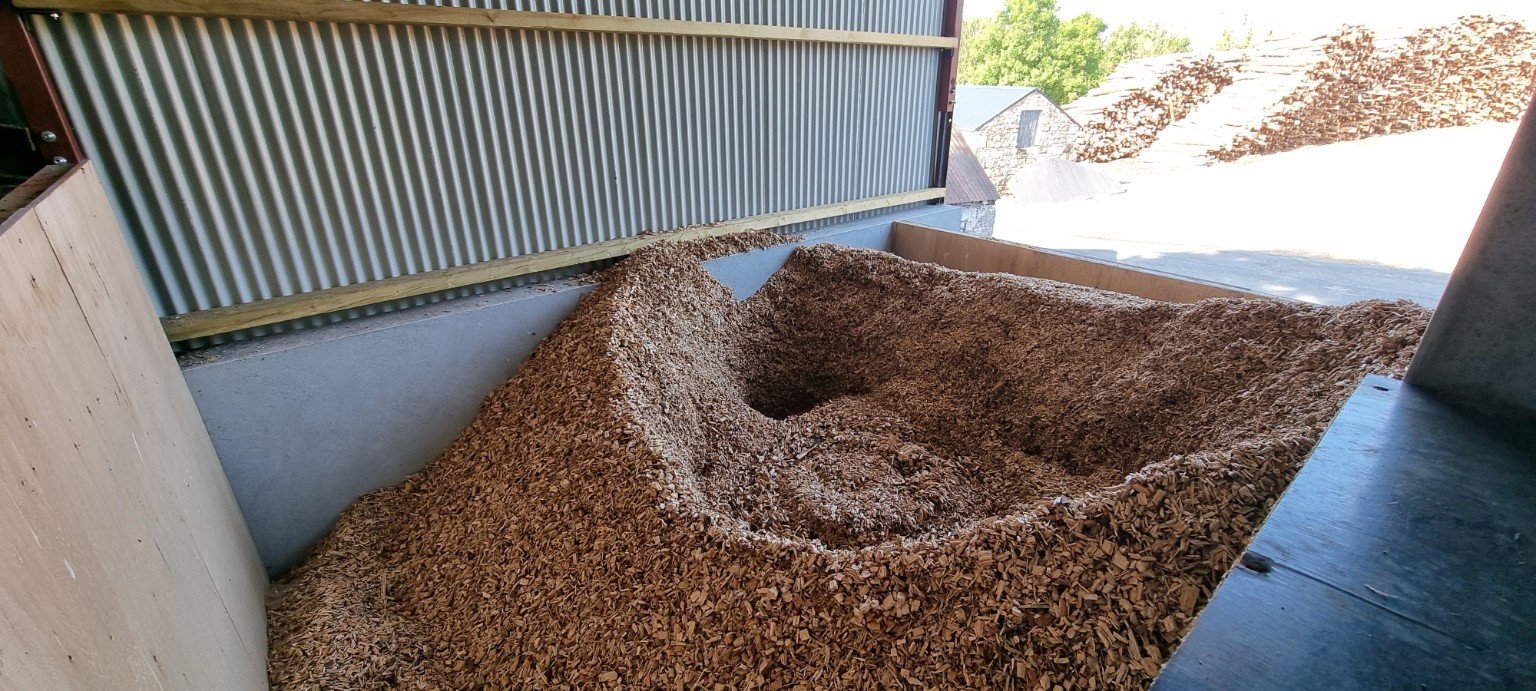
Bridging in the fuel store
Oversized, stringy or inconsistent chip can fail to flow properly through some fuel stores and extraction systems.
 Request a quote
Resource Centre article
A practical guide to how wood chip specification, moisture content, particle size, contamination and storage affect commercial biomass boiler performance.
Reliable heat
A biomass boiler is only as reliable as the fuel it is designed to burn. Boiler design, maintenance, controls and installation quality all matter, but unsuitable or inconsistent wood chip can create avoidable operational problems.
Heat system
Wood chip is not simply a delivered commodity. It interacts with the fuel store, extraction system, augers, conveyors, combustion chamber, controls, ash handling and maintenance regime.
If the fuel does not suit the system, the symptoms may appear as a boiler problem, a handling problem, a combustion problem or a maintenance problem.
Reliability issues
Oversized, stringy or inconsistent chip can fail to flow properly through some fuel stores and extraction systems.
Oversized particles, contamination or unsuitable material can increase the risk of feed-system interruptions.
Inconsistent moisture content or particle size can make boiler control less predictable.
Poor-quality fuel may increase cleaning, inspection and intervention requirements.
High moisture content can reduce useful energy per tonne and affect boiler performance.
Fuel-related issues can contribute to interruptions, particularly when combined with storage, access or maintenance problems.

Moisture content
Wet or inconsistent fuel can reduce useful heat output and make combustion less predictable. Some boiler issues blamed on the boiler may begin with fuel that is outside the suitable moisture range for that system.
Read about commercial moisture contentParticle size
Fuel that is too coarse, too fine or inconsistent can affect how chip moves through the store and feed system. The correct chip grade depends on the boiler manufacturer's specification and the physical fuel-handling arrangement.
Read about wood chip specification
Contamination
Stone, soil, metal, plastic, oversized material and unsuitable fines can increase wear, blockages, ash issues and downtime risk. Clean handling and sensible raw material control are part of professional biomass fuel supply.
Storage and site conditions
Even good fuel can deteriorate if the fuel store allows water ingress, poor drainage, poor ventilation, contamination or poor stock rotation. Boiler reliability depends on both supplier quality and site storage conditions.
Check for water ingress
Keep delivery areas clean
Avoid mixing unsuitable material
Monitor bridging or feed issues
Rotate stock sensibly
Keep access suitable for deliveries
Review store design if problems persist
Diagnosis
When a biomass boiler is unreliable, it is important not to guess. The issue may be fuel specification, moisture, particle size, contamination, storage, boiler maintenance, controls, commissioning, servicing or a combination of factors.
Recent fuel deliveries
Moisture content
Particle size
Visible contamination
Fuel-store condition
Feed-system symptoms
Boiler alarms
Combustion behaviour
Ash condition
Service history
McCauley Wood Fuels approach
McCauley Wood Fuels works to understand the boiler, fuel store, delivery access, annual demand and operating pattern before agreeing supply. The objective is dependable renewable heat, not simply moving tonnes of wood chip.
Specification-led commercial chip
Moisture-managed supply
Practical fuel advice
Specification awareness
Supplier review
Commercial heat users should review fuel quality where recurring boiler issues, inconsistent deliveries, excessive fines, variable moisture, bridging, blockages, increased maintenance or unexplained heat-output issues are occurring.
Fuel is not the only possible cause of boiler problems, but a structured fuel review can help narrow the issue and identify practical next steps.
FAQ
Yes. Unsuitable or inconsistent wood chip can contribute to feeding problems, combustion instability, higher maintenance demand and avoidable downtime. However, boiler condition, controls, maintenance and storage also matter.
Moisture content is important, but it is not the only issue. Particle size, contamination, consistency, storage and boiler suitability also affect reliability.
Oversized or inconsistent chip can cause problems in some fuel stores and feed systems, depending on the boiler and handling arrangement.
Start by reviewing recent deliveries, moisture content, particle size, contamination, storage conditions, feed-system symptoms, boiler alarms and service history.
Yes. McCauley Wood Fuels can discuss your boiler, fuel store, current supplier experience and operating issues before recommending a suitable next step.
Fuel issues
Speak with McCauley Wood Fuels about fuel specification, moisture content, particle size, storage conditions and practical supply planning.